
The Changing Value of Expertise
For decades, the safest career advice was relatively simple.
Learn specialized knowledge.
Master technical systems.
Become the person with the answers.
That approach made sense when information was difficult to access and expertise was harder to distribute across organizations.
AI is beginning to change that equation.
Not because expertise no longer matters, but because information itself is becoming increasingly abundant.
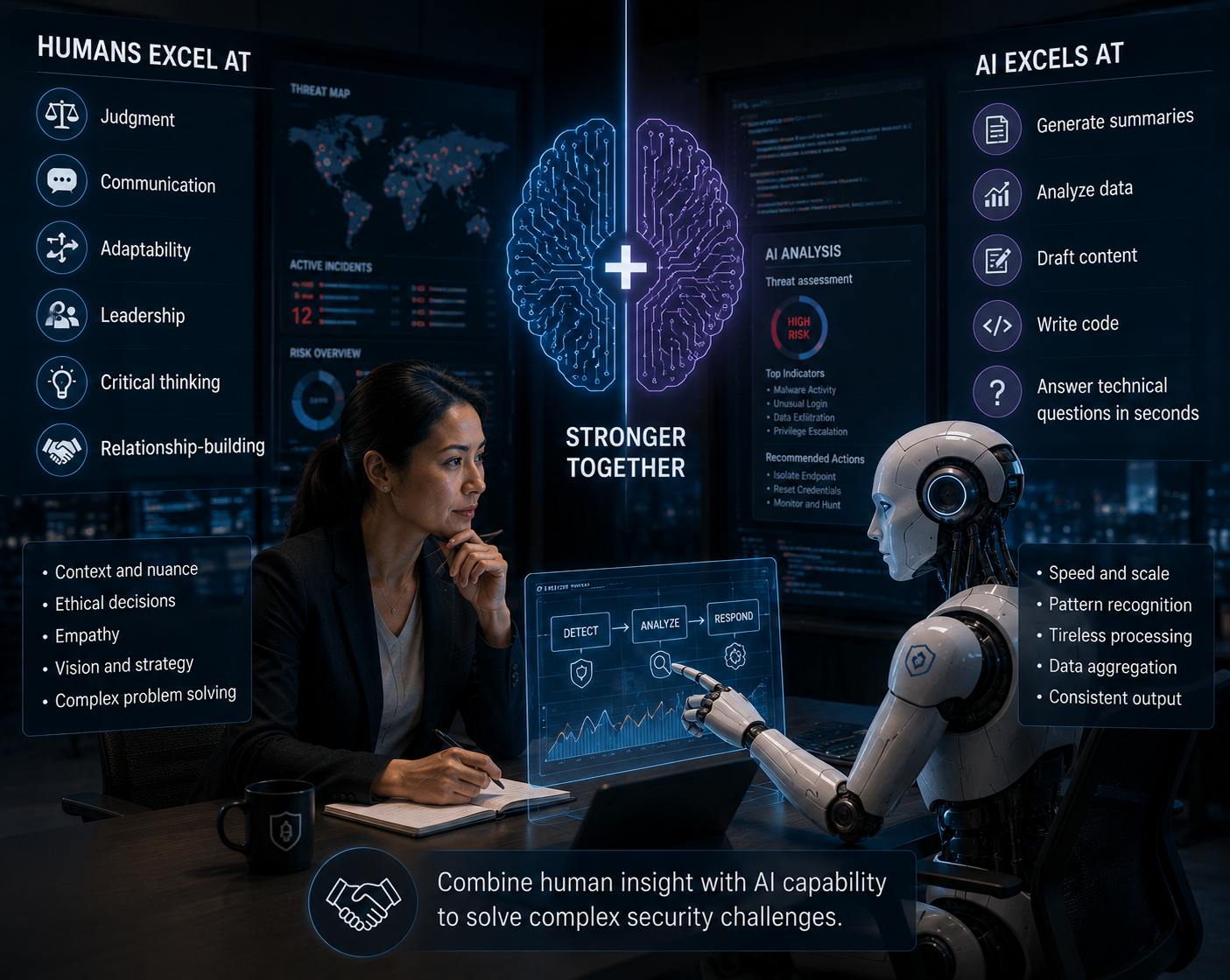
Today, AI can:
- Summarize complex information in seconds
- Analyze large volumes of data
- Draft content and documentation
- Generate code
- Answer technical questions quickly
Tasks that once depended heavily on access to knowledge can now be completed much faster.
As a result, the value of work is beginning to shift.
The differentiator is no longer simply possessing information.
It is knowing what to do with it.
Information Is Becoming Abundant, Judgment Is Becoming Scarce
One of the most important impacts of AI is that it changes the economics of information.
Information is becoming easier to generate, access, and distribute.
What remains difficult is interpretation.
Organizations increasingly need people who can evaluate information, understand context, and make sound decisions when the answer is not obvious.
This is why some of the most valuable skills in the years ahead will be deeply human ones:
- Judgment
- Communication
- Adaptability
- Leadership
- Critical thinking
- Relationship building
These capabilities become more important, not less, as AI adoption increases.
What AI Does Well, And What Humans Still Own
AI is exceptionally good at generating outputs.
It can summarize reports.
It can identify patterns.
It can generate recommendations.
It can draft communications.
But output generation is not the same as understanding.
A model can summarize a situation. It cannot fully understand the organizational dynamics behind a decision.
It can draft a proposal. It cannot establish trust with a customer.
It can generate recommendations. It cannot assume accountability for the outcome.
That distinction is critical.
From a security and leadership perspective, accountability, context, and judgment remain fundamentally human responsibilities.
The Rise of the AI-Augmented Professional
The professionals who thrive in an AI economy will not simply be technical experts.
They will be people who know how to work effectively alongside AI.
They will know how to:
- Ask better questions
- Interpret outputs intelligently
- Validate recommendations
- Challenge assumptions
- Connect ideas across disciplines
- Guide teams through change
The value shifts from generating information to directing and applying it.
This creates a different kind of competitive advantage.
Why Human Skills Matter More in Security
Security teams offer a useful example of this shift.
AI can help:
- Analyze alerts
- Correlate events
- Summarize incidents
- Prioritize risks
But security professionals still provide:
- Risk judgment
- Business context
- Escalation decisions
- Regulatory interpretation
- Strategic guidance
Practical Security Implementation Ideas
Organizations can prepare for this shift by:
- Training employees on AI literacy and critical evaluation skills
- Developing decision-making frameworks that combine AI insights with human oversight
- Encouraging cross-functional collaboration between technical and business teams
- Investing in communication and leadership development alongside technical training
The goal is not simply to create better AI users.
It is to create better decision makers.
Talent Evolution Is the Real AI Conversation
Many discussions about AI focus on technology adoption.
While technology matters, the longer-term challenge is talent evolution.
Organizations must rethink what skills they prioritize, hire for, and develop.
Future success will depend less on who can gather information and more on who can:
- Interpret it effectively
- Apply it responsibly
- Communicate it clearly
- Make decisions under uncertainty
These capabilities become increasingly valuable as automation handles more routine execution.
The Workforce of the Future
I do not believe the future belongs exclusively to technical specialists.
Nor do I believe it belongs exclusively to generalists.
The future belongs to adaptable professionals who can combine technical understanding with human insight.
People who understand how technology works.
People who understand how organizations work.
People who can bridge the gap between the two.
That is the workforce many organizations are now beginning to build.
Final Thoughts
AI is changing the value of work.
As information becomes more abundant, uniquely human capabilities become more important.
The organizations that succeed will not simply invest in technology.
They will invest in people who can apply judgment, communicate effectively, navigate complexity, and lead through change.
Because in an AI economy, the most important question is not what machines can do.
It is what humans should focus on doing better than ever.
FAQs: Skills, AI, and the Future of Work
1. What skills become more valuable as AI adoption increases?
Judgment, critical thinking, communication, adaptability, leadership, and relationship building become increasingly valuable because they provide context and decision-making capabilities that AI cannot fully replicate.
2. Will technical expertise still matter in an AI economy?
Yes. Technical knowledge remains important, but it becomes even more powerful when combined with business context, communication skills, and strategic thinking.
3. How should organizations prepare their workforce for AI?
Organizations should focus on both AI literacy and human capability development, helping employees understand how to use AI effectively while strengthening skills such as judgment, collaboration, and decision making.
Want to be the first to know when new blogs are published? Sign up for our newsletter and get the latest posts delivered straight to your inbox. From actionable insights to cutting-edge innovations, you'll gain the knowledge you need to drive your business forward.